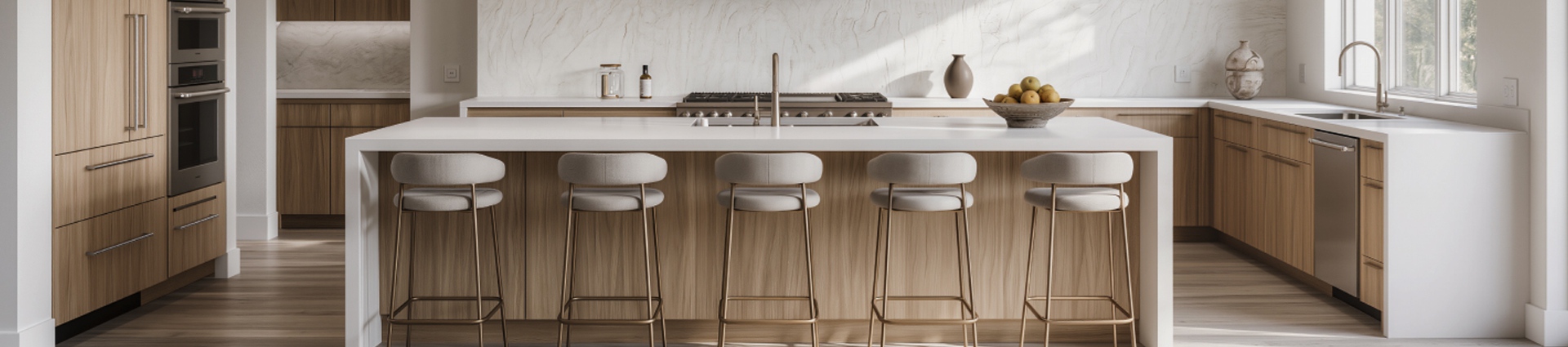
Bar stool height directly affects comfort, space functionality, and the relationship between seating and countertops. A stool that is too high or too low can create an uncomfortable sitting position and reduce the overall experience of a bar, restaurant, kitchen island, or commercial space.
Finding the correct height requires understanding the relationship between the seat, counter, table, and user posture. A proper correct bar stool height guide helps avoid common sizing problems and improves both design and usability.
The main purpose of choosing the correct height is creating enough space between the seat and countertop. This allows users to sit naturally while keeping enough room for legs and movement.
A properly sized stool should provide:
Comfortable knee position
Suitable arm movement
Balanced sitting posture
Easy access to the counter
Incorrect height selection may cause users to lean forward, raise their shoulders, or feel uncomfortable after sitting for a long time.
Bar stools usually fall into several height categories based on the counter or table they are paired with.
| Stool Type | Typical Seat Height | Suitable Application |
|---|---|---|
| Counter Stool | Around 60–70 cm | Kitchen islands and lower counters |
| Bar Height Stool | Around 70–80 cm | Traditional bars and high counters |
| Adjustable Stool | Flexible height range | Multi-purpose spaces |
The exact measurement depends on the countertop height and design requirements. Manufacturers usually confirm dimensions before production to ensure the final combination works correctly.
The gap between the seat and countertop is an important comfort factor. Users need enough space to sit naturally without feeling restricted.
A practical measurement considers:
| Space Consideration | Purpose |
|---|---|
| Seat-to-counter distance | Provides leg movement |
| Stool width | Determines seating arrangement |
| Counter depth | Influences user comfort |
| Footrest position | Supports relaxed sitting |
For commercial spaces, manufacturers also consider how easily stools can be arranged, moved, and cleaned.
The choice between fixed and adjustable designs depends on the application.
Fixed-height stools are often preferred in restaurants and bars because they provide consistent seating arrangements and simple maintenance.
Adjustable stools offer more flexibility and can adapt to different users or environments.
The decision should consider:
Frequency of use
Space requirements
Maintenance expectations
Design style
A wholesale seating supplier usually provides different height options to match various applications.
Height cannot be considered separately from the overall stool structure. Backrests, armrests, cushions, and footrests all influence comfort.
For example, a stool with a higher backrest may require more surrounding space, while a compact backless stool can work better in smaller areas.
Modern bar stool designs often combine:
Ergonomic seat angles
Supportive backrests
Stable footrests
Different swivel functions
These details improve usability while maintaining the desired appearance.
Before placing an order, several specifications should be confirmed.
| Check Item | Reason |
|---|---|
| Seat Height | Ensures correct counter matching |
| Overall Size | Prevents space planning problems |
| Material | Determines durability and maintenance |
| Function | Confirms fixed or swivel requirements |
| Sample Testing | Verifies comfort and appearance |
Meet U offers different bar stool styles, including fixed-height stools, swivel models, and upholstered designs, with customization options for colors, sizes, and finishes.
Correct bar stool height improves not only comfort but also space organization. Properly matched seating allows customers to use counters naturally and helps maintain a cleaner visual layout.
In restaurants, cafes, and hospitality spaces, the right stool height supports smoother customer interaction and better space utilization.
The best height depends on the relationship between the stool and its surrounding environment. There is no single measurement suitable for every application.
A successful selection considers countertop dimensions, user comfort, product structure, and daily usage conditions. When these elements are balanced, bar stools can provide both practical performance and a better overall space experience.
Share models, materials, quantity and timeline. We reply within 24 hours.


Monday - Friday: 9:00 AM - 6:00 PM (CST)
Saturday: 9:00 AM - 12:00 PM
Sunday: Closed