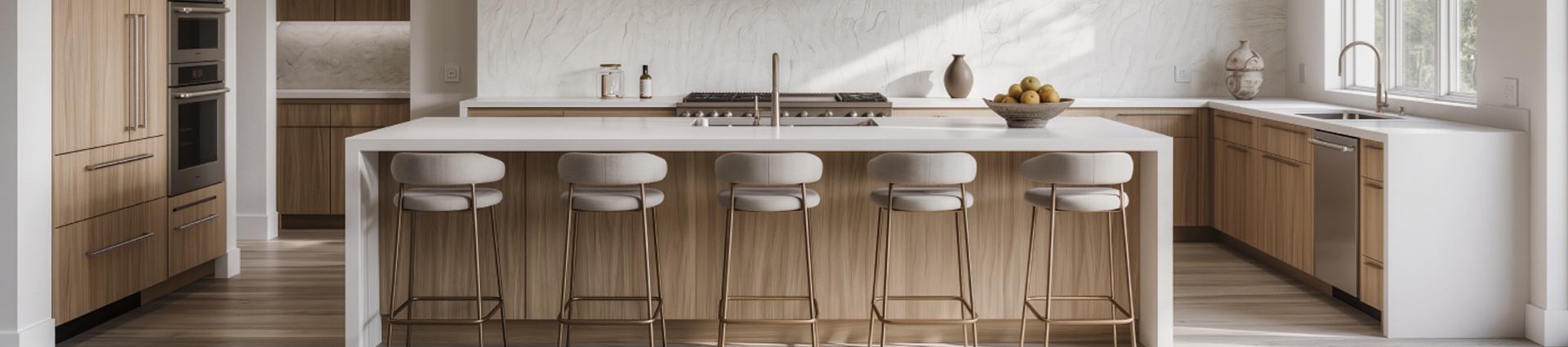
Bar stool height affects more than appearance. It changes sitting comfort, legroom, traffic flow, and how well a space works in daily use. When buyers compare counter seating and bar seating, the most important rule is simple: measure the finished surface first, then match the stool to it. A reliable bar stool height guide starts with the countertop or bar top, not the product photo. Standard accessible dining and work surfaces under ADA rules are 28 to 34 inches high, while mainstream kitchen and hospitality layouts often use counters around 36 inches and bar tops around 42 inches.
For most projects, the difference between counter height and bar height is clear. Counter stools are generally used with surfaces around 34 to 36 inches high, and the seat height usually falls around 24 to 27 inches. Bar stools are generally paired with surfaces around 40 to 42 inches high, and the seat height usually falls around 28 to 30 inches. Many sizing references also recommend keeping about 10 to 12 inches between the seat and the underside of the surface so people can sit naturally without feeling cramped.
The table below gives a practical reference for common applications.
| Surface Type | Surface Height | Suggested Seat Height | Typical Applications |
|---|---|---|---|
| Dining table | 28 to 30 in | 17 to 19 in | cafés, casual dining, meeting areas |
| Counter | 34 to 36 in | 24 to 27 in | kitchen islands, coffee bars, retail counters |
| Bar | 40 to 42 in | 28 to 30 in | pubs, lounge areas, hospitality bars |
These ranges are widely used because they support better posture and easier leg placement. A counter height bar chair that is too low makes the user reach up toward the surface, while a stool that is too tall makes knees feel crowded.
Counter height seating is usually the better choice for spaces that need a more relaxed and versatile feel. It works well for cafés, apartment public areas, showroom consultation corners, and especially kitchen island high stools in residential-style environments. The visual height is softer, entry and exit feel easier, and the seating often fits mixed-use spaces where people may sit for coffee, light dining, discussion, or laptop work. NKBA kitchen planning guidance also notes that a 36 inch counter should allow about 15 inches of knee space depth for seated users, which helps explain why this height works well in everyday settings.
Counter height is also easier to integrate into layouts where comfort matters as much as style. For projects targeting broader age groups or longer seating duration, a slightly lower seat often feels more approachable. This is why many buyers prefer counter-height programs for open-plan interiors and retail hospitality concepts.
Bar height is more suitable when the project wants a stronger visual separation or a more classic hospitality look. A 40 to 42 inch bar creates a taller line in the space and can help define social zones in bars, hotel lounges, entertainment corners, and some foodservice settings. Bar-height stools also help align with standing guests and active service environments. According to NKBA guidance, a 42 inch counter commonly allows about 12 inches of knee space depth for each seated diner, which reflects the more upright seating posture at this height.
That said, bar height should not be selected only because it looks more upscale. If the bar top is fixed at standard counter height, using taller stools will create discomfort immediately. The wrong height is one of the most common specification mistakes in seating procurement.
Height is only one part of the decision. Buyers should also check how many stools can fit comfortably. Home Depot’s measuring guide recommends about 26 to 30 inches from the center of one stool to the center of the next, and about 8 to 10 inches between seats. This becomes especially important when the design includes arms, thick upholstery, or swivel movement.
A stool can be correct in height but still fail in use if the spacing is too tight. For commercial interiors, comfort and circulation must be considered together.
Meet U Furniture is located in Longjiang, Shunde, a major furniture manufacturing base known for strong supply chain coordination and seating production capability. For buyers, that brings a practical advantage: product development and order execution can be aligned more efficiently across bar stools, Bar Tables, Dining Chairs, Leisure Chairs, and home office seating. Instead of selecting by appearance alone, buyers can compare seat height, frame structure, upholstery options, finish consistency, and matching collections in one sourcing process.
From a manufacturer’s perspective, the right stool height should always be confirmed alongside application, seat shape, and layout plan. A well-made stool is not simply a tall chair. It is a seating solution matched to the exact surface height and the way people will use the space every day.
If the finished surface is around 34 to 36 inches, choose counter-height stools. If the finished surface is around 40 to 42 inches, choose bar-height stools. Keep enough seat-to-surface clearance, review spacing, and think about how long people will sit and how often the area will be used. That is the most practical way to use a bar stool height guide and make the right decision for different applications.
Share models, materials, quantity and timeline. We reply within 24 hours.


Monday - Friday: 9:00 AM - 6:00 PM (CST)
Saturday: 9:00 AM - 12:00 PM
Sunday: Closed