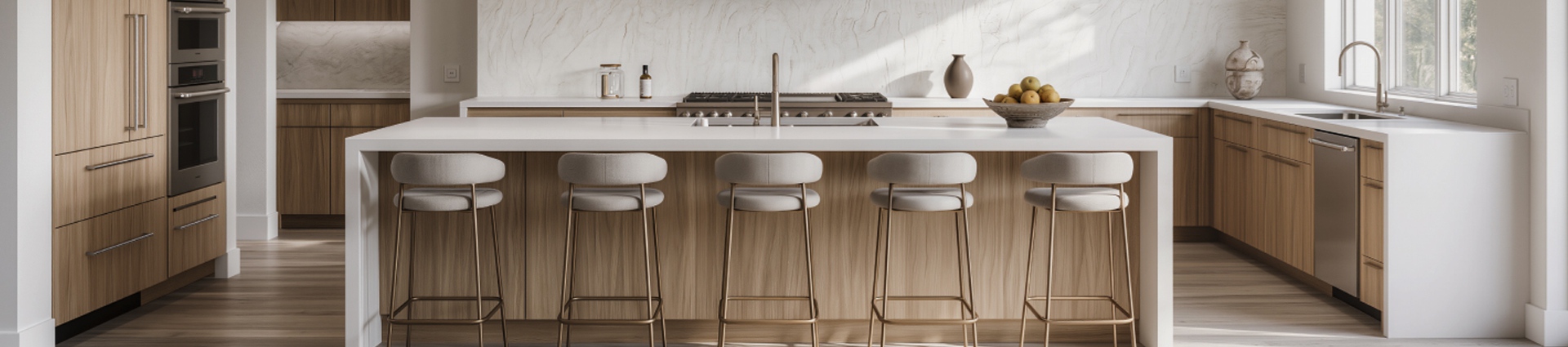
Modern bar stools combine different materials to achieve the right balance between appearance, comfort, durability, and production efficiency. Material selection influences not only the visual style of a space but also how the product performs in restaurants, bars, cafes, kitchens, and commercial environments.
A proper bar stool material comparison should consider frame structure, seating materials, maintenance requirements, and application conditions. Different material combinations create different product characteristics, allowing manufacturers to develop solutions for various interior styles and usage needs.
The frame determines the stability and overall strength of a bar stool. Manufacturers usually select frame materials based on required durability, design style, and production requirements.
| Frame Material | Characteristics |
|---|---|
| Steel | Strong structure and suitable for frequent use |
| Stainless Steel | Modern appearance and corrosion resistance |
| Wood | Natural appearance and warm design style |
| Mixed Materials | Combines different performance advantages |
Steel frames are widely used in commercial seating because they provide reliable support and can be combined with different finishes. Proper welding, polishing, and coating processes help improve the final product performance.
The seat material influences comfort, appearance, and maintenance requirements. Different applications require different seating solutions.
Fabric seats provide a softer feeling and are commonly used where comfort is important. PVC and similar surfaces are often selected for spaces that require easier cleaning and maintenance.
Common seat materials include:
Fabric upholstery
PVC covering
Leather materials
Wood surfaces
The choice depends on factors such as cleaning frequency, interior style, expected usage time, and customer comfort requirements.
For upholstered designs, internal foam quality affects the overall seating experience. The foam density and structure determine whether the seat maintains comfort after repeated use.
High-quality foam helps provide:
Better sitting support
More stable shape retention
Improved long-term comfort
Reduced deformation
For commercial applications, foam selection should consider both comfort and durability because chairs may be used continuously throughout the day.
Surface treatment protects materials while improving appearance. Different finishes are selected according to material types and application environments.
For metal frames, common treatments include:
| Finish Type | Function |
|---|---|
| Powder Coating | Improves surface protection and appearance |
| Painting | Provides color options and design flexibility |
| Polishing | Creates a smooth decorative surface |
For upholstered areas, surface quality depends on fabric processing, stitching accuracy, and material consistency.
Material selection should match the environment where the bar stools will be used.
For example:
Restaurants with frequent cleaning requirements may prefer durable and easy-care surfaces.
Premium dining spaces may focus more on comfort, texture, and visual design.
Flexible commercial spaces may require materials that balance durability with modern appearance.
A custom bar stool factory usually considers these factors together instead of selecting materials based only on appearance.
Modern furniture design often combines different materials to create unique visual effects and improved performance.
Examples include:
| Combination | Advantage |
|---|---|
| Metal + Fabric | Strong structure with comfortable seating |
| Metal + PVC | Easy maintenance and commercial durability |
| Wood + Upholstery | Natural appearance with improved comfort |
| Steel + Mixed Finishes | Flexible modern styling |
Combining materials allows manufacturers to create products that meet both functional and aesthetic expectations.
Material selection influences long-term operating expenses. A beautiful chair that requires difficult maintenance may create additional workload after installation.
Before selecting materials, manufacturers and purchasers should consider:
Cleaning methods
Usage frequency
Environmental conditions
Expected product lifespan
Meet U develops bar stools with different material combinations, including metal structures, upholstered seats, and customized finishes, supporting various furniture applications.
The best material solution is not always the most expensive option. It should match the product purpose, usage environment, and expected performance.
A well-designed bar stool combines suitable materials, reliable structure, comfortable seating, and efficient maintenance. These factors work together to create furniture that maintains both appearance and function over long-term use.
Share models, materials, quantity and timeline. We reply within 24 hours.


Monday - Friday: 9:00 AM - 6:00 PM (CST)
Saturday: 9:00 AM - 12:00 PM
Sunday: Closed