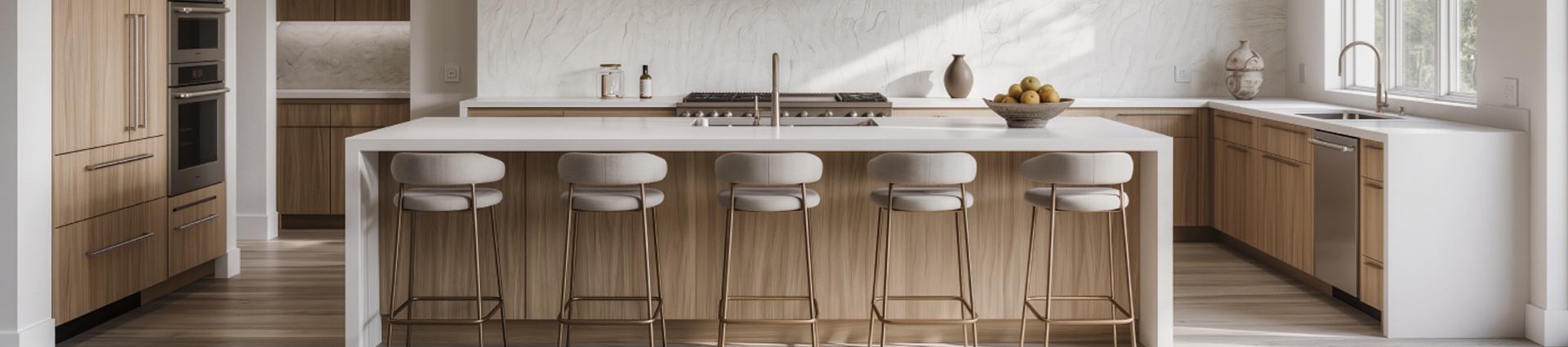
Material selection is one of the most important decisions when choosing bar stools. It determines durability, maintenance requirements, comfort level, and how well the product performs over time. A clear bar stool material comparison helps buyers balance appearance with long-term usability, especially in environments where seating is used frequently.
From a manufacturing perspective, the best material is not simply the strongest one. It is the material that matches the usage frequency, cleaning routine, and design expectations of the space.
Metal is widely used in commercial seating due to its strength and stability. Steel frames are especially common because they can handle repeated use without deformation.
Advantages:
High load capacity and structural stability
Strong resistance to impact and long-term wear
Suitable for high-traffic environments
Easy to clean with standard detergents
Considerations:
Surface coating quality is critical
Poor finishing may lead to scratches or corrosion over time
Seating comfort depends on added cushions or seat design
According to seating durability testing aligned with BIFMA standards, metal frame chairs often perform well in fatigue and load testing due to their rigid structure and consistent material strength. (bifma.org)
Metal stools are commonly used in restaurants, bars, and retail environments where durability is the primary requirement.
Wood provides a warmer visual appearance and is often selected for spaces that require a more natural or premium look.
Advantages:
Strong aesthetic value with natural texture
Comfortable seating feel when properly shaped
Can be combined with upholstery for added comfort
Considerations:
Sensitive to humidity and temperature changes
Requires proper coating to prevent cracking or deformation
Slightly higher maintenance compared to metal
Well-processed hardwood frames can maintain good structural integrity, but consistency in moisture control during production is essential. Manufacturers typically use kiln-dried wood to reduce deformation risk.
Wood stools are suitable for cafés, dining areas, and spaces where visual warmth is part of the design concept.
Fabric seating focuses on comfort and user experience. Products such as fabric bar stools with backs are often chosen for spaces where people sit for longer periods.
Advantages:
Soft seating surface improves comfort
Wide range of colors and textures
Enhances overall interior design
Considerations:
Requires regular cleaning
More sensitive to stains and spills
Durability depends on fabric quality and density
Industry textile testing shows that abrasion resistance, often measured in Martindale cycles, is a key indicator of fabric durability. Commercial-grade upholstery typically exceeds 25,000 cycles, while heavy-duty applications may require over 40,000 cycles.
Fabric stools are commonly used in lounges, dining areas, and premium retail environments where comfort is prioritized.
Combining upholstery with a swivel structure creates a more flexible and comfortable seating solution. upholstered swivel bar stools are often selected for spaces that require both movement and comfort.
Advantages:
Enhanced user convenience through rotation
Comfortable seating for longer durations
Suitable for interactive or social environments
Considerations:
More complex structure requires higher quality control
Swivel mechanism durability is critical
Maintenance includes both fabric care and mechanical inspection
In manufacturing, the combination of upholstery and moving parts requires stricter testing standards to ensure long-term performance. Both the seat structure and the swivel mechanism must maintain stability under repeated use.
Different materials perform differently depending on usage conditions. The table below provides a simplified comparison:
| Material | Durability | Maintenance | Comfort | Best Use |
|---|---|---|---|---|
| Metal | Very high | Low | Medium | High-traffic commercial areas |
| Wood | High | Medium | Medium | Dining and design-focused spaces |
| Fabric | Medium | Higher | High | Lounge and long seating areas |
| Upholstered swivel | Medium to high | Higher | Very high | Social and premium environments |
Meet U Furniture is located in Longjiang, Shunde, a well-established furniture manufacturing region. This provides strong support in material sourcing, production control, and finishing consistency.
For buyers, this means:
Stable supply of metal, wood, and upholstery materials
Consistent finish quality across bulk orders
Flexible combinations of frame and seat materials
Production experience across bar stools, Dining Chairs, and related seating
Instead of selecting materials individually, buyers can evaluate complete product solutions that balance durability, comfort, and cost.
There is no single best material for all bar stools. Metal offers strength, wood provides visual warmth, and fabric improves comfort. The right choice depends on how the stool will be used, how often it will be cleaned, and how long users will sit.
A practical bar stool material comparison should always consider real usage conditions rather than appearance alone.
Share models, materials, quantity and timeline. We reply within 24 hours.


Monday - Friday: 9:00 AM - 6:00 PM (CST)
Saturday: 9:00 AM - 12:00 PM
Sunday: Closed