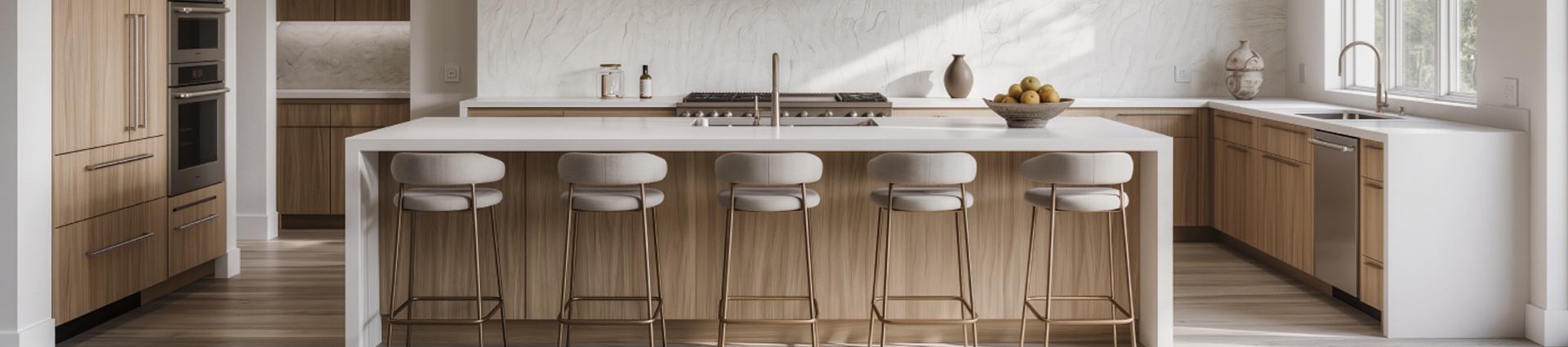
Comfort at an elevated counter depends on more than adding a thick cushion. Seat height, foot support, backrest shape and structural stability all influence how a bar stool feels during dining, conversation or waiting. For hospitality spaces, these details can affect how long guests remain seated and how consistently the furniture performs under frequent use.
A stool should leave approximately 25–30 cm between the seat and the underside of the counter. This distance provides usable thigh clearance without making the user reach upward toward the counter.
Seats around 60–70 cm high generally suit kitchen counters measuring 85–95 cm, while seats around 70–80 cm are commonly paired with commercial bar surfaces measuring 100–110 cm. Measurements should always be taken to the lowest obstruction because thick tabletops and support rails reduce actual legroom.
A wider seat distributes body weight more evenly than a narrow surface. Many upholstered stools use a seat width of approximately 40–50 cm, although models with armrests require additional space.
Seat depth should support the thighs without pressing behind the knees. A rounded front edge helps reduce concentrated pressure, especially when users remain seated for extended periods. Slight contouring can stabilize the pelvis, but an excessively deep curve may restrict movement.
Well-developed padded bar stools combine suitable dimensions with foam that retains its shape. Very soft filling may initially feel comfortable but can compress quickly and leave the user sitting against the internal support structure.
Unlike Dining Chairs, elevated stools normally prevent users from resting both feet on the floor. Without a correctly positioned footrest, the legs remain unsupported and pressure increases beneath the thighs.
The footrest should be easy to reach without forcing the knees too high. Its position must be coordinated with seat height and frame geometry. Steel footrests also need sufficient strength and secure welding because users frequently apply downward and outward force when getting onto the stool.
A low backrest can stabilize the pelvis during short stays, while a medium or high back provides more support for dining and hospitality use. The backrest angle should follow the stool’s seat position instead of pushing the user forward.
A comfortable bar stool design may include fixed seating, full rotation or a memory-return swivel mechanism. Smooth movement makes entry and conversation easier, while auto-return functions help maintain a neat seating arrangement. The mechanism should operate without excessive looseness, noise or sudden resistance.
Key comfort points include:
Appropriate seat-to-counter clearance
Supportive foam with controlled compression
Rounded seat edges
Reachable and stable footrests
Backrests aligned with natural posture
Frames that remain steady during movement
Even a well-padded seat feels uncomfortable when the stool rocks or flexes. Frame dimensions, weld quality, base width and floor glides should work together to keep the product stable.
Meet U evaluates seating proportions, upholstery and frame structure during sampling. Buyers working with a hospitality stool wholesale supplier should test the complete stool at the intended counter rather than assess the seat separately.
Comfort results from coordinated dimensions and reliable support. When height, cushioning, footrest position and stability are developed as one system, bar stools perform more effectively across restaurants, hotels, cafés and shared dining spaces.
Share models, materials, quantity and timeline. We reply within 24 hours.


Monday - Friday: 9:00 AM - 6:00 PM (CST)
Saturday: 9:00 AM - 12:00 PM
Sunday: Closed