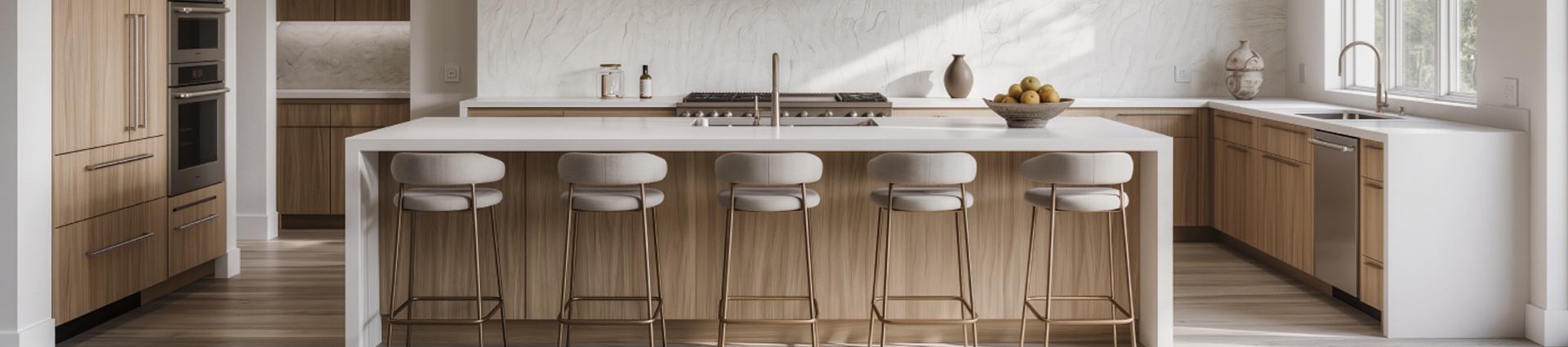
Seat angle influences how body weight is distributed across the pelvis and thighs. When a seat tilts too far backward, users may struggle to stand or reach a work surface. When the front edge rises excessively, pressure can build behind the knees and restrict comfortable leg movement. A balanced angle supports the body without concentrating force in one area.
| Seating Position | Approximate Angle | Main Consideration |
|---|---|---|
| Upright task seating | 0° to 3° backward | Supports desk work |
| General dining seating | 0° to 5° backward | Balances posture and comfort |
| Relaxed seating | 5° to 10° backward | Provides a reclined feeling |
| Forward task position | 1° to 5° forward | Encourages open hip posture |
These figures describe common design ranges rather than one universal specification. The most comfortable chair seat angle depends on seat height, depth, cushion compression and backrest position.
A seat that rises toward the front can press against the underside of the thighs. The problem becomes more noticeable when the seat is too high and the user’s feet do not rest firmly on the floor.
The front edge should normally be rounded and slightly lower than the main sitting surface. This waterfall-shaped profile distributes contact more gradually and gives the user more freedom to bend the knees.
Angle cannot be evaluated independently from height. Even a suitable angle may feel uncomfortable if shorter users cannot place their feet on the floor. Their body weight shifts forward, and the front edge carries more pressure.
Adjustable seating can reduce this problem by allowing the user to lower the chair. Fixed dining and bar seating must instead be developed around the intended table or counter height. Footrests are particularly important for elevated seating because they provide a stable support point.
Soft foam compresses unevenly and can create a different effective angle after the user sits down. Excessively soft padding may allow the pelvis to sink while leaving the thighs supported by a firmer front edge.
For stable ergonomic chair seating, manufacturers should evaluate the loaded seat profile, not only the unoccupied chair. Foam density, cushion thickness, internal support and upholstery tension all affect the final position.
A modest rearward angle generally works best when the backrest also supports a slightly reclined posture. Combining a strongly tilted seat with an upright back can rotate the pelvis backward and make the user slump.
Dining Chairs usually require an easier entry and exit position, while lounge chairs can support a deeper recline. Task chairs benefit from controlled movement because users alternate between typing, reading and leaning back.
An ergonomic seating design manufacturer should check seat angle using physical prototypes, dimensional tools and user trials. Testing should include different heights and body proportions because one person’s feedback cannot represent an entire market.
During sample approval, users should sit for more than a few minutes, place both feet naturally, move forward and stand up. Attention should be paid to pressure beneath the thighs, pelvic stability and contact with the backrest.
The right seat angle is usually subtle rather than visually dramatic. When height, depth, edge shape and cushioning are coordinated correctly, the user receives steady support without uncomfortable pressure behind the legs.
Share models, materials, quantity and timeline. We reply within 24 hours.


Monday - Friday: 9:00 AM - 6:00 PM (CST)
Saturday: 9:00 AM - 12:00 PM
Sunday: Closed