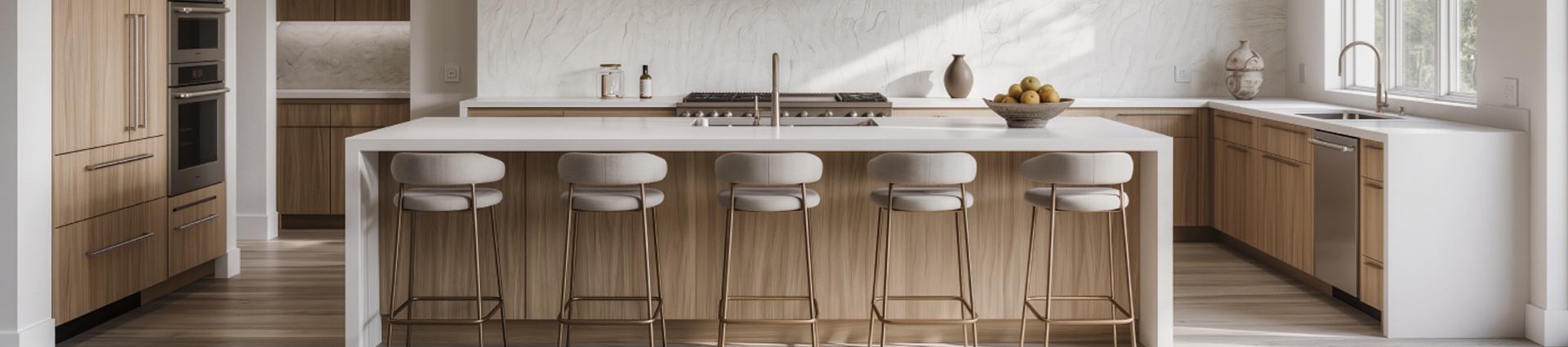
Counter stools and bar stools may look similar, but they are designed for different table heights, seating positions, and application environments. Understanding the differences helps furniture suppliers and space designers choose suitable seating solutions for kitchens, restaurants, cafes, hotels, and commercial areas.
The main differences are related to seat height, counter compatibility, and user experience. A correct choice improves comfort, enhances space layout, and prevents problems caused by unsuitable furniture dimensions.
The most important difference between counter stools and bar stools is seat height. The stool height should match the surface height to allow comfortable sitting posture and proper leg space.
Counter stools are generally designed for standard kitchen counters and islands, while bar stools are made for higher bars and commercial counters.
| Stool Type | Typical Seat Height | Suitable Surface Height |
|---|---|---|
| Counter stool | About 58-72 cm | About 86-96 cm counter height |
| Bar stool | About 72-82 cm | About 100-110 cm bar height |
These measurements are common industry ranges, but manufacturers may adjust dimensions based on product design and market requirements.
According to ergonomic recommendations from workplace and furniture studies, maintaining a suitable relationship between seat height and tabletop height helps reduce uncomfortable sitting positions and improves long-term user experience.
Counter stools are commonly used in residential kitchens, breakfast counters, and casual dining spaces. Their lower seat height allows users to sit comfortably at kitchen islands without excessive leg elevation.
Many modern interiors use counter seating because it creates a more relaxed connection between cooking areas and dining spaces. Counter stools are also popular in cafes and small restaurants where a casual atmosphere is preferred.
For manufacturers developing furniture collections, counter stools often focus on comfort, compact size, and easy integration with different interior styles.
Bar stools are designed for higher surfaces such as beverage counters, restaurants, and entertainment areas. Their taller structure creates a different seating experience and works well with elevated tables.
Commercial spaces often prefer bar stools because they help maximize vertical space and create flexible seating arrangements. Products with footrests and swivel functions can improve convenience in busy environments.
A swivel adjustable height bar stool provides additional flexibility because users can change the seat position according to different counter heights and usage needs.
A clear counter vs bar stools comparison helps identify the right option for different environments.
| Feature | Counter Stool | Bar Stool |
|---|---|---|
| Seat height | Lower seating position | Higher seating position |
| Main use | Kitchen islands, counters, casual dining | Bars, restaurants, hospitality spaces |
| Space feeling | Relaxed and home-oriented | More commercial and social |
| Common functions | Fixed height or adjustable models | Swivel and height adjustment options |
| User posture | Suitable for everyday dining | Suitable for elevated counters |
Height is not the only factor when selecting stools. Materials, frame structure, upholstery, and functions also influence product performance.
For commercial environments, strong internal frames and durable surfaces are important because furniture may experience frequent daily use. Upholstered seats improve comfort, while PVC and fabric materials offer different maintenance advantages.
counter height bar chairs with adjustable functions can provide more flexibility because they can adapt to different environments. Features such as 360-degree rotation, footrests, and height adjustment are commonly selected for modern commercial spaces.
The correct stool depends on the environment, usage frequency, and design requirements.
| Application | Recommended Choice |
|---|---|
| Kitchen island | Counter stool |
| Cafe counter | Counter stool or lower bar stool |
| Restaurant bar | Bar stool |
| Hotel lounge | Upholstered bar stool |
| Office social area | Adjustable swivel stool |
Education content about stool selection helps customers understand that height matching is more important than choosing based only on appearance.
For furniture manufacturers, developing both counter and bar stool collections allows more flexibility for different applications. Product design should consider dimensions, materials, functions, and interior trends.
A well-designed seating range can include fixed stools, swivel models, adjustable height options, and different upholstery choices. This approach helps meet diverse requirements across residential, hospitality, and commercial spaces.
Understanding the difference between counter and bar stools allows better product selection and creates more comfortable, functional environments.
Share models, materials, quantity and timeline. We reply within 24 hours.


Monday - Friday: 9:00 AM - 6:00 PM (CST)
Saturday: 9:00 AM - 12:00 PM
Sunday: Closed