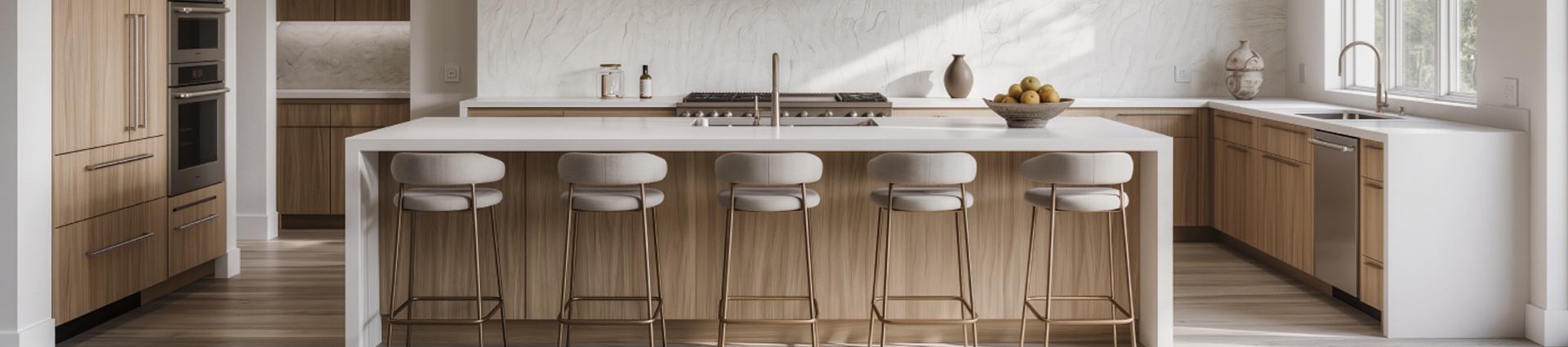
In today’s furniture market, products are no longer competing on function alone. Branding has become a key factor in differentiation, especially for buyers building their own collections. Bar stools, as visible and frequently used items, offer strong potential for brand expression. A well-planned custom bar stool design allows buyers to create recognizable products that reflect identity, style direction, and market positioning.
For private label buyers, the goal is not simply to customize appearance. It is to develop products that are consistent, scalable, and aligned with a clear brand story. This requires coordination between design, materials, structure, and manufacturing capability.
Every successful product begins with a defined positioning. Before designing bar stools, buyers should identify their target market, price level, and visual identity.
Brand positioning typically falls into several categories:
Minimal modern with neutral tones and clean lines
Warm residential with soft textures and natural finishes
Premium collections with richer materials and fuller structures
Practical everyday use with durable and simple designs
A strong custom bar stool design reflects this positioning consistently. Without a clear direction, customization can become fragmented and reduce brand recognition.
The silhouette of a bar stool is often the first element customers notice. It communicates style immediately and sets the tone for the entire collection.
Curved forms tend to feel softer and more residential, while straight lines create a more structured and modern impression. Backrest height, seat thickness, and leg shape all contribute to the overall identity.
For example, private label bar stools designed for premium positioning often feature fuller backrests and more substantial seat profiles. In contrast, minimalist collections may use slimmer frames and lighter visual weight.
Consistency in silhouette across different models helps build a recognizable brand language.
Materials play a critical role in branding because they influence both appearance and user experience. The same structure can convey completely different identities depending on the materials used.
Common material strategies include:
Fabric upholstery for warmth and comfort
Leather-look surfaces for a refined and durable feel
Wood finishes for natural and residential appeal
Metal frames for a modern and industrial look
Combining materials thoughtfully enhances product value. For example, a fabric seat paired with wood-tone legs creates a warm and inviting look, while a leather-like finish with black metal produces a sharper, contemporary style.
Material consistency across a collection strengthens brand coherence and makes private label bar stools easier to recognize in the market.
Color is one of the most powerful branding tools. A clear and consistent color strategy helps products stand out and creates a unified visual identity.
Many successful collections use a layered approach:
Core neutral colors for stable sales
Secondary tones for seasonal variation
Accent colors for differentiation
This is where custom color furniture chairs become valuable. By offering controlled color variations, buyers can adapt to different markets while maintaining a consistent brand image.
Neutral shades such as beige, gray, and black provide a foundation, while colors like olive, terracotta, or deep blue add personality without overwhelming the collection.
Design is not only visual. Functional features also contribute to branding by influencing user experience.
Key features to consider include:
Swivel mechanisms for flexibility
Armrests for added comfort
Footrests for ergonomic support
Adjustable heights for versatility
For example, a collection focused on comfort may include padded seats, supportive backs, and swivel functions. A more minimalist line may reduce features to maintain a clean appearance.
Aligning function with design ensures that custom bar stool design delivers both visual and practical value.
Branding extends beyond the product itself. Packaging, labeling, and small details all contribute to the overall perception.
Custom packaging options include:
Branded cartons or labels
Protective materials that match product positioning
Clear assembly instructions for user convenience
Attention to these details enhances the customer experience and reinforces the brand message.
| Element | Focus area | Branding impact |
|---|---|---|
| Silhouette | Shape and proportion | Defines visual identity |
| Materials | Fabric, wood, metal | Builds product character |
| Color | Neutral and accent tones | Strengthens recognition |
| Function | Comfort and usability | Supports positioning |
| Packaging | Presentation and protection | Completes brand image |
Design alone cannot achieve branding goals without reliable production. Consistency in materials, color matching, and structural quality is essential for maintaining brand standards.
Meet U Furniture, located in Longjiang, Shunde, operates within a mature furniture manufacturing environment. This enables efficient development of customized products, stable material sourcing, and precise production control.
As an experienced supplier, the company supports private label bar stools by integrating design, engineering, and manufacturing into a unified process. This ensures that each product aligns with brand requirements while maintaining consistent quality.
Designing bar stools for branding is not a one-time task. It is an ongoing process that evolves with market trends and customer preferences. By focusing on silhouette, materials, color, and functionality, buyers can build collections that remain relevant over time.
A well-executed custom bar stool design creates more than a product. It creates a recognizable identity that helps differentiate offerings in a competitive market. When supported by consistent manufacturing and thoughtful design choices, branded bar stools become a strong asset in building long-term value.
Share models, materials, quantity and timeline. We reply within 24 hours.


Monday - Friday: 9:00 AM - 6:00 PM (CST)
Saturday: 9:00 AM - 12:00 PM
Sunday: Closed