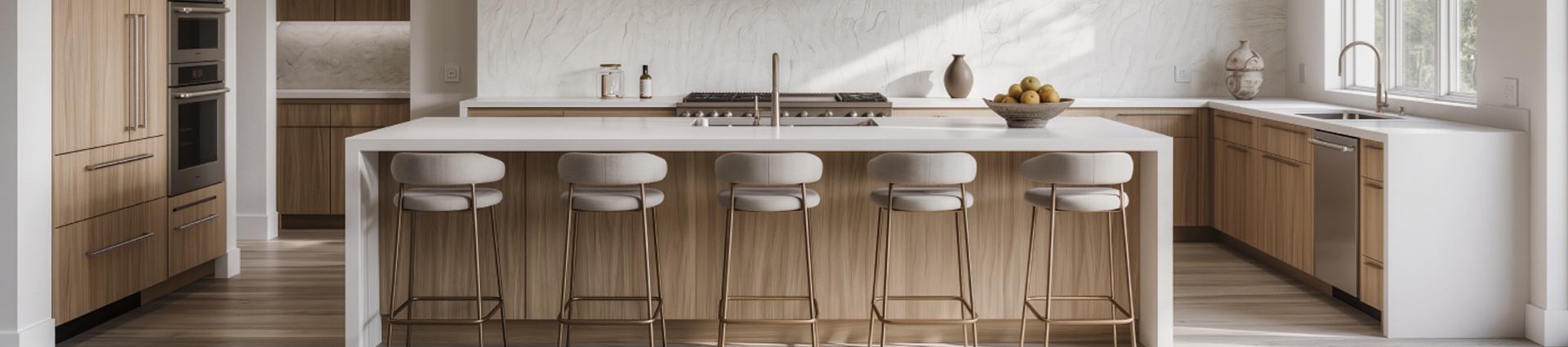
Bar stools have moved far beyond simple seating. They now play a key role in defining kitchen islands, open dining areas, and multi-functional living spaces. As residential layouts evolve, bar stool design is also changing to meet new expectations in comfort, flexibility, and visual appeal. Understanding current bar stool design trends helps buyers and manufacturers create products that align with global demand and remain competitive across multiple markets.
Recent interior reports highlight a shift toward warmer environments, softer shapes, and more human-centered design. These changes are directly influencing how bar stools are developed, from structure to material selection.
One of the most visible trends is the move away from rigid, sharp-edged designs toward softer, rounded silhouettes. Curved backrests, wrapped seat shells, and smooth transitions between components are becoming more common.
This shift is driven by the demand for more comfortable and inviting interiors. Curved forms not only improve ergonomics but also create a more relaxed visual atmosphere. In open-plan homes, where bar stools are often visible from multiple angles, softer shapes help integrate seating with the overall interior design.
These developments are central to current bar stool design trends, where comfort and aesthetics are increasingly combined rather than treated separately.
Flexibility has become a key requirement in modern homes. As spaces serve multiple purposes, seating needs to adapt easily. This has led to a rise in swivel designs across both dining and bar seating categories.
Products such as modern swivel Dining Chairs and counter height swivel chairs reflect this demand. Swivel mechanisms allow users to turn, interact, and move without repositioning the chair, making them especially suitable for kitchen islands and social spaces.
From a design perspective, the challenge is to integrate swivel functionality without compromising stability or visual balance. High-quality mechanisms and well-designed bases ensure smooth rotation while maintaining structural integrity.
Comfort is no longer optional. It is a defining factor in product selection. Bar stools are now expected to support longer sitting periods, especially in homes where islands are used for dining, working, and socializing.
Key comfort features include:
Padded seats with balanced foam density
Ergonomic backrests that support natural posture
Footrests positioned for proper leg support
Research from ergonomic studies indicates that proper seat depth and back support reduce fatigue and improve overall sitting experience. This focus on comfort is shaping bar stool design trends, pushing manufacturers to prioritize user experience alongside visual appeal.
Material direction is shifting toward warmer and more tactile surfaces. Natural wood tones, textured fabrics, and matte finishes are replacing colder, high-gloss materials.
Design reports from recent years highlight increased interest in earthy palettes, soft textiles, and layered materials. These elements create a more welcoming environment and align with the broader movement toward comfortable living spaces.
For bar stools, this translates into combinations such as:
Upholstered seats with wood-look legs
Fabric textures paired with metal frames
Matte finishes that reduce visual harshness
These material choices not only enhance aesthetics but also improve the perceived quality of the product.
As urban living spaces become more compact, furniture must adapt to limited areas without sacrificing functionality. Bar stools are being designed with smaller footprints, lighter visual weight, and easier storage options.
Backless or low-back designs are gaining popularity in smaller kitchens, while slim profiles help maintain openness in tight spaces. At the same time, these designs must still provide adequate comfort and stability.
Products like counter height swivel chairs demonstrate how compact design can be combined with functional features to meet modern space requirements.
Color is playing a more important role in furniture design. While neutral tones remain dominant, there is growing interest in warm and expressive colors.
Popular directions include:
Earthy tones such as terracotta and olive
Deep, rich colors like navy and forest green
Soft neutrals with warm undertones
This trend allows buyers to create more distinctive collections. By offering controlled color variations, manufacturers can respond to different market preferences while maintaining a cohesive product line.
Sustainability is becoming a key consideration in product development. Buyers are increasingly interested in materials that are responsibly sourced and environmentally friendly.
This includes:
Certified wood materials
Durable fabrics that extend product lifespan
Efficient production processes that reduce waste
Sustainable design does not only meet regulatory requirements. It also adds value by aligning products with consumer expectations and long-term market trends.
| Trend | Description | Market impact |
|---|---|---|
| Curved forms | Softer silhouettes and rounded edges | Enhances comfort and visual appeal |
| Swivel functionality | Flexible seating with rotation | Improves usability in open spaces |
| Comfort focus | Ergonomic design and padding | Increases user satisfaction |
| Warm materials | Wood tones and textured fabrics | Aligns with current interiors |
| Compact design | Space-efficient structures | Fits smaller living areas |
| Color variation | Neutral base with accent tones | Supports personalization |
Meet U Furniture, located in Longjiang, Shunde, benefits from a well-developed furniture manufacturing ecosystem. This enables efficient material sourcing, precise production control, and flexible product development.
By integrating trend insights with engineering and manufacturing expertise, the company can translate design directions into stable, scalable products. This includes developing seating that combines comfort, functionality, and visual appeal while maintaining consistent quality.
Bar stool design is evolving alongside changes in how people use their living spaces. The shift toward multifunctional environments, comfort-driven choices, and warmer aesthetics is shaping the future of seating.
Understanding bar stool design trends allows buyers to anticipate market demand and build collections that remain relevant over time. Products that combine ergonomic comfort, flexible functionality, and thoughtful material selection are more likely to succeed in a competitive global market.
By aligning design with real usage patterns and current interior directions, bar stools can move beyond basic seating and become an integral part of modern living environments.
Share models, materials, quantity and timeline. We reply within 24 hours.


Monday - Friday: 9:00 AM - 6:00 PM (CST)
Saturday: 9:00 AM - 12:00 PM
Sunday: Closed