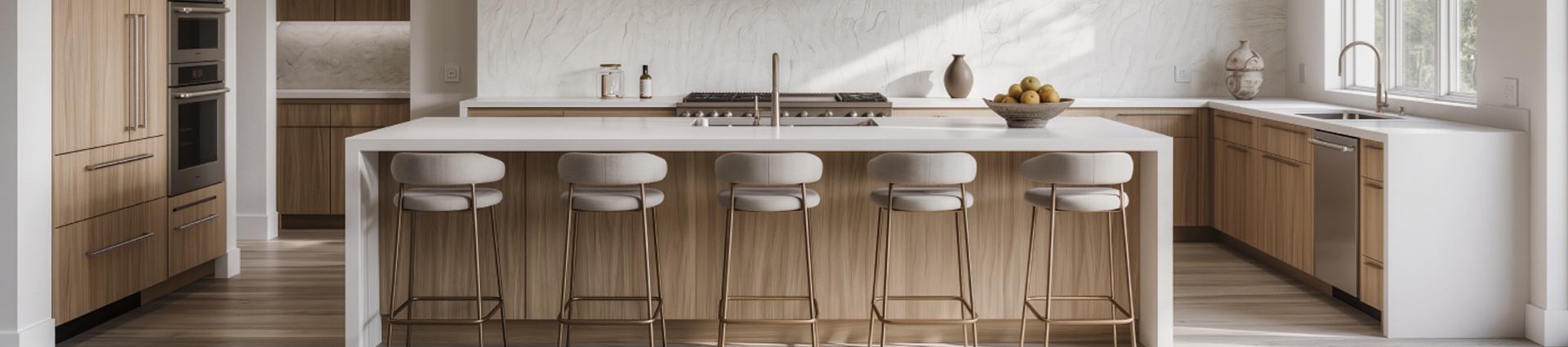
Comfort in bar stools is not created by appearance alone. It comes from how the seat supports the body over time, how the materials respond to pressure, and how the structure matches natural sitting posture. In many cases, discomfort appears within minutes, and this is often the main reason customers reject or return a product. Understanding the key factors behind comfortable bar stools design helps reduce complaints and improves long-term user satisfaction.
Seat depth is one of the most overlooked factors in bar stool comfort. If the seat is too deep, the front edge presses against the back of the knees, which can restrict circulation and create discomfort. If the seat is too shallow, the thighs are not properly supported, causing pressure concentration on a smaller area.
Ergonomic studies from Cornell University show that an ideal seat depth is around 41 to 43 cm for most adults. This range allows the user to sit back comfortably while maintaining a small gap between the seat edge and the knee. In bar stools, this becomes even more important because the sitting height is higher, and any imbalance is amplified.
For kitchen counter swivel bar stools, proper seat depth ensures that users can sit naturally while turning or adjusting position. When paired with a well-positioned footrest, it significantly reduces fatigue during longer sitting periods.
Foam is not just about softness. It directly affects how weight is distributed across the seat surface. Low-density foam may feel soft at first touch, but it compresses quickly and loses support. High-density foam provides better resilience and maintains shape over time, which is essential for both residential and commercial use.
Industry data suggests that foam density between 28 and 35 kg per cubic meter is commonly used in seating products to balance comfort and durability. Below this range, deformation occurs faster. Above this range, the seat may feel too firm if not properly designed.
A well-balanced cushion structure often combines layered foam with a supportive base. This allows the seat to absorb pressure while still offering enough resistance to keep the body stable. In upholstered swivel Dining Chairs, this combination is especially important because users tend to move and rotate frequently, requiring both flexibility and support.
Comfort is not only about materials. It is also about how the chair interacts with the human body. Ergonomic design focuses on posture alignment, pressure distribution, and ease of movement.
According to OSHA seating guidelines, a well-designed chair should support the lower back, allow feet to rest comfortably, and avoid sharp pressure points. Rounded seat edges, also known as waterfall edges, help reduce pressure on the thighs. Proper backrest angle supports the natural curve of the spine and reduces strain during extended sitting.
For bar stools, ergonomics also includes seat height and footrest placement. If the footrest is too high or too low, the user may feel unstable or uncomfortable. A correct setup allows the knees to bend naturally while keeping the body balanced.
These factors are essential in comfortable bar stools design, where even small adjustments in angle or height can significantly change user experience.
| Factor | Recommended Range | Impact on Comfort |
|---|---|---|
| Seat depth | 41–43 cm | Supports thighs without knee pressure |
| Foam density | 28–35 kg/m³ | Balances softness and durability |
| Seat width | 45–55 cm | Provides enough sitting space |
| Backrest angle | 95°–105° | Supports natural posture |
| Footrest height | Proportional to seat height | Reduces leg fatigue |
These parameters are widely used in seating design and are based on ergonomic research and industry testing standards.
Even the best foam and dimensions cannot deliver comfort if the structure is unstable. A strong internal frame ensures that the seat maintains its shape and support over time. For swivel models, the rotation mechanism must remain smooth and balanced, without noise or looseness.
Meet U Furniture, located in Longjiang, Shunde, benefits from a mature furniture manufacturing ecosystem. This allows continuous refinement of structure, material selection, and ergonomic testing. By integrating production experience with design optimization, the company ensures that each product delivers consistent seating performance.
A comfortable bar stool is not defined by a single feature. It is the result of seat depth, foam quality, ergonomic structure, and precise manufacturing working together. When these elements are properly balanced, the chair feels natural from the first use and remains reliable over time.
In real usage scenarios, whether in dining spaces or high-traffic environments, comfort directly influences user feedback and product acceptance. Products such as kitchen counter swivel bar stools and upholstered swivel dining chairs demonstrate how combining movement, support, and material quality leads to a better seating experience.
Reducing discomfort is not about adding more padding. It is about designing every detail to match how people actually sit, move, and use the product in daily life.
Share models, materials, quantity and timeline. We reply within 24 hours.


Monday - Friday: 9:00 AM - 6:00 PM (CST)
Saturday: 9:00 AM - 12:00 PM
Sunday: Closed