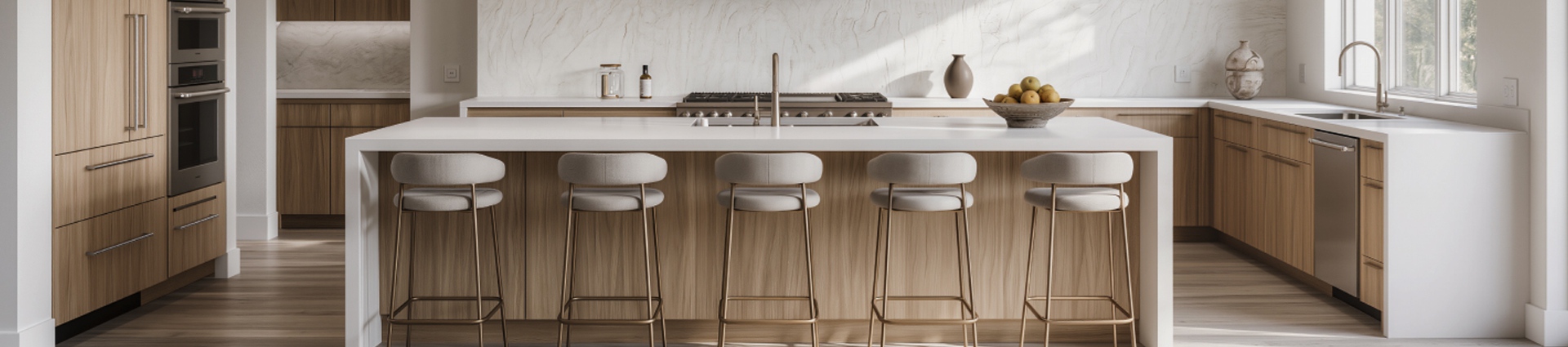
Bar stools and counter stools may look similar, but their height, application, and design requirements are different. Selecting the wrong type can create uncomfortable seating positions and affect the overall functionality of a space.
Understanding the difference between bar stool vs counter stool helps manufacturers and buyers create better seating combinations for restaurants, kitchens, cafes, and hospitality environments.
The main difference comes from the height of the surface they are paired with. Bar stools are designed for higher counters, while counter stools are made for lower surfaces.
The seat height determines whether users can sit comfortably while maintaining a natural posture.
| Feature | Bar Stools | Counter Stools |
|---|---|---|
| Seat Height | Higher seating position | Lower seating position |
| Common Use | Bars, high counters, beverage areas | Kitchen counters, lower islands |
| Space Feeling | Creates a taller visual effect | Provides a more relaxed sitting height |
| Design Focus | Often emphasizes elevated seating | Often emphasizes everyday comfort |
Choosing the correct height is essential because even a well-designed stool may feel uncomfortable when matched with the wrong surface.
The relationship between the stool and counter height determines sitting comfort.
A properly matched stool should allow enough space for:
Natural leg movement
Comfortable arm positioning
Relaxed sitting posture
Easy interaction with the counter
When a stool is too high, users may feel pressure on their legs. When it is too low, the seating position may feel unnatural.
Manufacturers usually confirm the intended application before developing stool dimensions.
Counter stools are commonly selected for lower-height surfaces such as kitchen islands, casual dining counters, and cafe counters.
They are often preferred when the space requires a more relaxed and accessible seating experience.
Counter stools usually focus on:
Comfortable daily use
Easy movement
Compact proportions
Flexible placement
Their lower height makes them suitable for environments where customers or users spend longer periods sitting.
Bar stools are commonly used in spaces with higher counters, including bars, restaurants, and beverage areas.
They create a more elevated seating experience and are often paired with standing-height tables or counters.
A commercial seating supplier usually considers:
Counter dimensions
Expected usage frequency
Required comfort level
Space arrangement
These factors help determine whether a bar stool design is suitable for the environment.
Although the two products share similar concepts, their structures may vary depending on usage requirements.
Bar stools often require additional stability because of their higher center of gravity. Features such as footrests, stronger frames, and supportive backrests can improve comfort and safety.
Counter stools may focus more on compact design and everyday usability.
The difference is not only about height but also about how the product interacts with the surrounding space.
Before ordering, the relationship between furniture and environment should be carefully evaluated.
Important questions include:
What is the height of the counter?
How long will users typically sit?
Will the stool be used in a high-traffic commercial area?
Does the design match the overall interior style?
These answers help determine the most suitable seating solution.
The right stool improves both customer experience and space efficiency. Incorrect sizing can affect comfort, appearance, and daily operation.
Meet U provides different bar stool and counter stool solutions with options for materials, finishes, and customized designs to meet different commercial seating requirements.
The biggest difference is height, but successful selection depends on more than measurement. The stool must match the counter, usage environment, comfort requirements, and overall design.
Understanding these differences allows spaces to achieve better functionality while maintaining a consistent visual style.
Share models, materials, quantity and timeline. We reply within 24 hours.


Monday - Friday: 9:00 AM - 6:00 PM (CST)
Saturday: 9:00 AM - 12:00 PM
Sunday: Closed