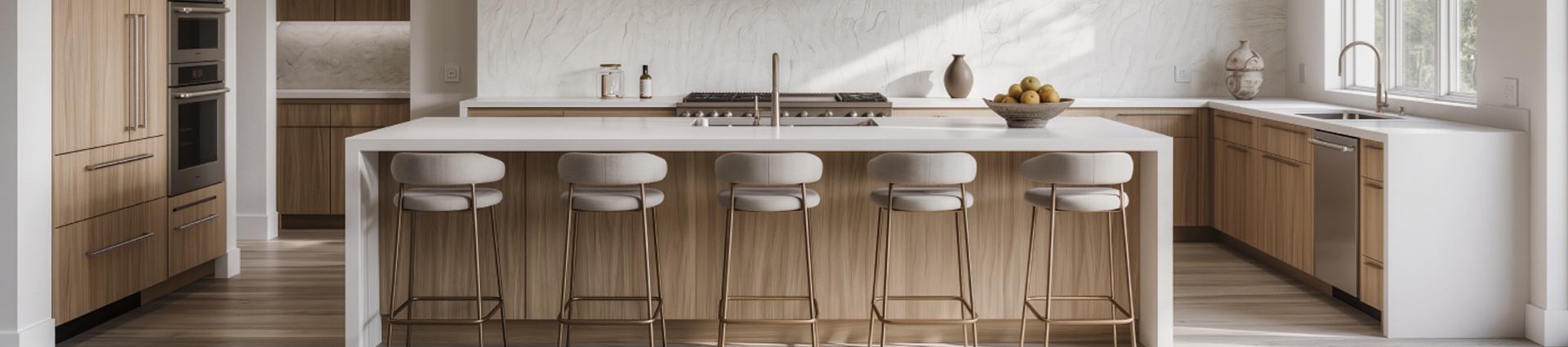
Seat depth determines how much of the thighs a chair supports and whether the user can sit fully against the backrest. When the seat is too deep, shorter users tend to slide forward and lose back support. When it is too shallow, body weight becomes concentrated on a smaller area, making longer meals less comfortable.
Seat depth is normally measured from the front edge of the seat to the point where the seat meets the backrest. On chairs with thick back cushions, the usable depth should be measured to the front surface of the cushion rather than the rear frame.
Many Dining Chairs use a depth of approximately 40–46 cm. The ideal dining chair depth depends on the target user group, backrest profile, cushion compression and intended sitting time.
A practical fit leaves around 5–8 cm between the front edge of the chair and the back of the user’s knees. This space reduces pressure while allowing the user to maintain contact with the backrest.
Users with shorter legs may be unable to place their feet flat on the floor when sitting against a deep backrest. They often move toward the front edge, leaving the lower back unsupported.
Adding a thick loose back cushion can reduce the usable depth, but it may also shift or compress unevenly. For fixed commercial seating, the chair’s dimensions should work without requiring additional cushions.
Deep seats are more suitable for relaxed lounge positions than upright dining. They can also increase the chair footprint, reducing the number of seats that fit around a table.
Shallow seating provides less support beneath the thighs and may create concentrated pressure around the pelvis. Taller users may feel as though they are sitting on the front section of the chair.
Increasing the seat angle does not fully correct insufficient depth. Dimensions, angle, cushion firmness and backrest position must be developed together.
For upholstered dining chairs, soft foam may increase perceived depth by allowing the user to sink backward. Firm foam maintains a more consistent sitting position but needs suitable edge shaping to avoid pressure.
| Design Element | Practical Reference |
|---|---|
| Typical dining seat depth | Approximately 40–46 cm |
| Clearance behind knees | Approximately 5–8 cm |
| Typical seat height | Approximately 43–48 cm |
| Seat-to-table difference | Approximately 25–30 cm |
| Space per dining position | Approximately 55–65 cm |
Armrest position also affects how easily users can move into the seat. A deep chair with long arms may feel enclosed and require more clearance from the table.
Meet U reviews seat dimensions with foam thickness, backrest angle and table compatibility during sample development. Evaluation should include people with different heights rather than relying on a single user.
An ergonomic dining chair manufacturer should provide overall depth and usable seat depth separately when the backrest or cushions occupy significant space. Purchasers can then compare the chair with their target tables and floor plans.
The best depth supports most of the thighs while preserving knee clearance and backrest contact. Balanced proportions help users sit naturally, move easily and remain comfortable throughout a meal.
Share models, materials, quantity and timeline. We reply within 24 hours.


Monday - Friday: 9:00 AM - 6:00 PM (CST)
Saturday: 9:00 AM - 12:00 PM
Sunday: Closed