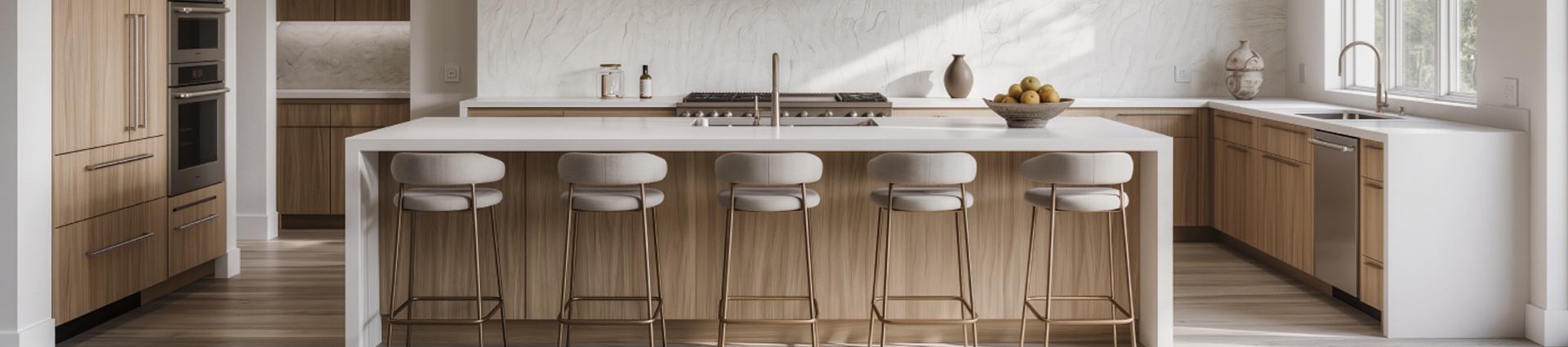
Comfortable dining depends on the relationship between the tabletop, chair seat and available legroom. Even well-designed chairs can feel unsuitable when their seats are paired with the wrong table height. Retailers, restaurant operators and project purchasers should therefore confirm both chair and table measurements before approving an order.
Most dining tables are approximately 71–76 cm high. For this range, a chair seat measuring around 43–48 cm from the floor is generally appropriate. The resulting difference of about 25–30 cm gives users room for their thighs while keeping their arms at a natural level.
This range is a useful starting point rather than an absolute rule. Tabletop thickness, support rails and user profiles can change the actual clearance. The standard dining chair height must therefore be checked against the complete table structure.
Seat height should be measured from the finished floor to the highest usable point of the seat. Upholstered cushions compress under body weight, so their unoccupied height may not represent the final sitting position.
Firm foam compresses less and maintains a more stable seat level. Softer filling may feel comfortable initially but lower the user’s position after sitting. Manufacturers should evaluate foam density, cushion thickness and support structure together when developing upholstered seating.
For modern Dining Chairs with curved shells or sloped seats, measurements should be taken near the central sitting area rather than at the raised front or side edge.
The top of the table is not always the true limit for legroom. Thick tops, metal frames, drawers and wooden aprons can extend several centimeters below the surface. A table that appears high enough may still feel restrictive when these structures are overlooked.
The most useful dimensions are:
Finished floor to tabletop
Finished floor to lowest obstruction
Uncompressed chair seat height
Expected cushion compression
Armrest height, when applicable
Armchairs require additional checking because the arms may strike the table edge. This can prevent the chair from being pushed under the table and increase the space required around each dining position.
Residential dining rooms often prioritize softer cushioning and relaxed sitting. Restaurants usually need a balance between comfort, easy entry and efficient customer movement. Banquet and event spaces may prefer compact chairs that can be rearranged or stored more easily.
For elderly users, a slightly higher seat can make standing easier, provided sufficient clearance remains under the table. Lower lounge-style dining chairs may create a relaxed appearance but can make eating uncomfortable when paired with a conventional table.
Samples should be evaluated with the intended table rather than reviewed separately. Sit at the table, check thigh clearance, place both feet on the floor and confirm that the backrest supports a natural posture. The chair should move in and out without its arms, legs or back striking nearby furniture.
| Checkpoint | Recommended Reference |
|---|---|
| Typical table height | 71–76 cm |
| Typical seat height | 43–48 cm |
| Seat-to-table difference | 25–30 cm |
| Space per dining position | About 55–65 cm |
| Rear movement clearance | About 75–90 cm |
A professional dining chair wholesale supplier should provide precise seat, armrest and overall dimensions. When customization is required, changes to leg length must also consider frame balance, footrest position, structural strength and carton size.
Meet U can review chair dimensions against the buyer’s table specifications during product development and sampling. Confirming the complete furniture relationship before mass production helps achieve better comfort, smoother installation and more consistent results across dining projects.
Share models, materials, quantity and timeline. We reply within 24 hours.


Monday - Friday: 9:00 AM - 6:00 PM (CST)
Saturday: 9:00 AM - 12:00 PM
Sunday: Closed