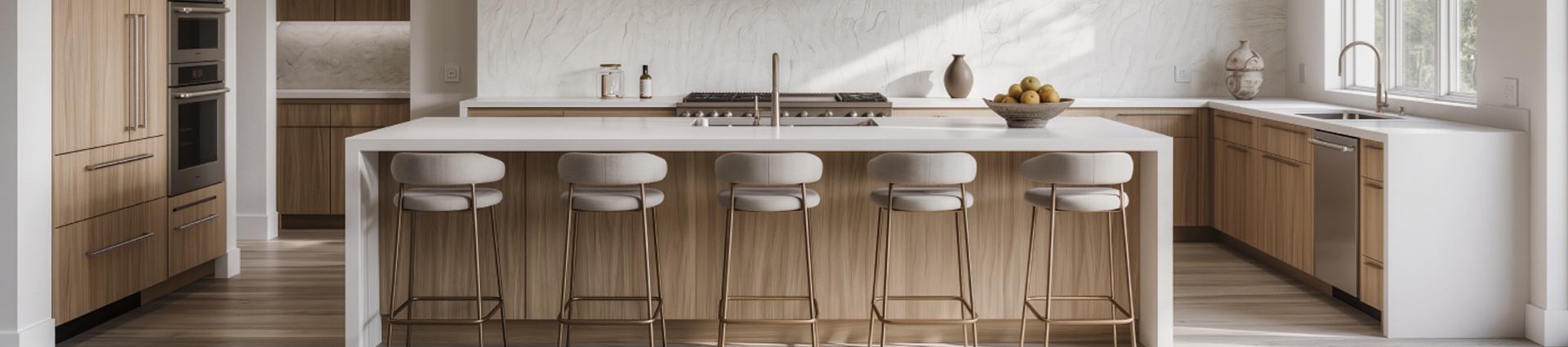
Bar stools are not only functional seating. In residential collections, they help define the visual tone of the kitchen, island, dining corner, or open-plan living area. When the style match is wrong, even a well-made stool can feel disconnected from the rest of the space. That is why bar stool design matching should begin with the interior concept first, then move into color, material, silhouette, and comfort details.
For furniture buyers building residential collections, the goal is not simply to choose attractive products one by one. The stronger strategy is to create stools that work across several popular home looks while still keeping a clear product identity. Recent design coverage shows a continued move toward warmer homes, sculptural furniture, curved edges, earthy tones, and more tactile materials. These directions are especially useful when planning bar stool assortments because they offer broad market appeal without feeling too generic.
A successful stool collection usually follows one of the major residential design directions now selling globally. Warm modern interiors favor soft curves, wood tones, textured fabrics, and muted neutrals. Japandi-inspired spaces prefer lighter visual weight, cleaner lines, and simple, calm finishes. Industrial settings still work well with metal frames and darker surfaces, but even this segment has moved toward softer and more livable details rather than harsh, cold forms. Architectural Digest also notes that current interiors are leaning toward comfort, wood, curved silhouettes, and restorative palettes rather than sterile minimalism.
For this reason, the first question should be: what type of room will the stool support? A rounded upholstered stool may work beautifully in a warm contemporary kitchen, while a slim metal design may fit a loft-style interior better. When product planning starts from the room style, matching becomes much more consistent.
Silhouette plays a major role in whether a stool feels integrated. In homes with soft furnishings, curved cabinet lines, and rounded lighting, a stool with gentle edges and a wrapped back usually creates a smoother transition. In cleaner, sharper interiors, straighter legs and more architectural frames may work better.
This is where low back bar stools become commercially useful. They give some support and visual structure without blocking sightlines across an island. In open kitchens, lower backs often make the room feel less crowded, especially when the island connects directly to the living area. On the other hand, tall bar stools with backs suit interiors where the seating zone needs a stronger presence or where users are expected to sit longer during meals and conversation. Their larger visual mass works well in more spacious layouts or premium residential settings.
Material choice often communicates style faster than color does. Current interior trend coverage points to stronger demand for natural materials, tactile finishes, cane, rattan influences, terracotta tones, and warmer wood expression. That gives buyers a clear direction when building bar stool collections. Fabric with visible texture, oak-look finishes, walnut tones, matte black metal, and warm neutrals all fit current residential demand well.
For example, a stool with a soft fabric seat and wood-look legs fits warm modern and Scandinavian-inspired homes. A leather-look finish with black metal may fit urban contemporary collections. A boucle-style surface or textured weave can help a simple shape feel more elevated. Good bar stool design matching often comes down to pairing just two or three materials correctly instead of adding too many decorative elements.
Recent design reporting shows a clear shift away from cool gray-heavy spaces toward earthy greens, terracotta, deep browns, creamy stones, warm whites, and balanced beige tones. This matters for stools because color now helps determine whether a product feels current or outdated. Neutral stools still lead in volume because they are easy to place, but collections perform better when neutrals are supported by a few well-chosen accent colors.
A practical collection strategy is to build around three layers. The first layer is safe core colors such as beige, taupe, charcoal, warm gray, and brown. The second layer introduces richer tones like clay, olive, rust, or dark forest shades. The third layer can be trend-driven accents for selected markets. This helps buyers cover both stable demand and new design interest without overcomplicating the assortment.
Style sells the first impression, but comfort decides whether the stool stays in the home. Kitchen and island seating should look aligned with the interior, yet still respect real spatial needs. NKBA planning guidance recommends a minimum knee space at a table or counter of 36 inches wide, 27 inches high, and 17 inches deep. These figures matter because even a visually perfect stool can perform poorly if the user lacks legroom or the seat scale does not suit the island depth.
That is why product matching should also consider seat height, back support, and visual openness. Low back bar stools are often the better option when buyers need to preserve a lighter look and avoid blocking the view across the kitchen. Tall bar stools with backs are a stronger choice when comfort time is longer and the island is used as a real dining zone rather than just a quick seating point.
| Collection direction | Recommended stool features | Best visual effect |
|---|---|---|
| Warm modern | Curved back, textured fabric, walnut or oak tones | Soft, upscale, easy to place |
| Japandi | Clean lines, light wood tone, neutral upholstery | Calm, minimal, refined |
| Urban contemporary | Black metal, leather-look or smooth fabric, slim frame | Sharp, modern, compact |
| Soft luxury | Full backrest, padded seat, deeper warm color palette | Richer and more premium |
| Casual family kitchen | Medium-width seat, durable fabric, supportive back | Practical and welcoming |
This type of grouping makes collection building easier because the buyer is no longer selecting isolated items. Instead, the buyer is planning a structured seating story that connects with the most common interior directions now seen in residential markets. The overall trend toward warm, personal, livable interiors supports this collection-based approach.
Meet U Furniture is located in Longjiang, Shunde, a mature furniture manufacturing area known for product development and supply-chain support. For a company focused on bar stools, Bar Tables, dining series, Leisure Chairs, and Home Office Chairs, this gives a practical advantage when building collections instead of only single products. It becomes easier to develop coordinated ranges with shared frames, varied finishes, and multiple backrest options that fit different interior styles.
In today’s market, the best bar stool collections are the ones that balance trend relevance with broad usability. Buyers need products that can sit naturally in open kitchens, islands, dining corners, and mixed-use living spaces. Matching bar stools with interior design therefore means more than selecting a fashionable shape. It means aligning silhouette, material, color, and comfort with the way homes are actually being designed now. When that alignment is clear, the collection feels stronger, easier to sell, and more valuable across different residential markets.
Share models, materials, quantity and timeline. We reply within 24 hours.


Monday - Friday: 9:00 AM - 6:00 PM (CST)
Saturday: 9:00 AM - 12:00 PM
Sunday: Closed